
Introduction
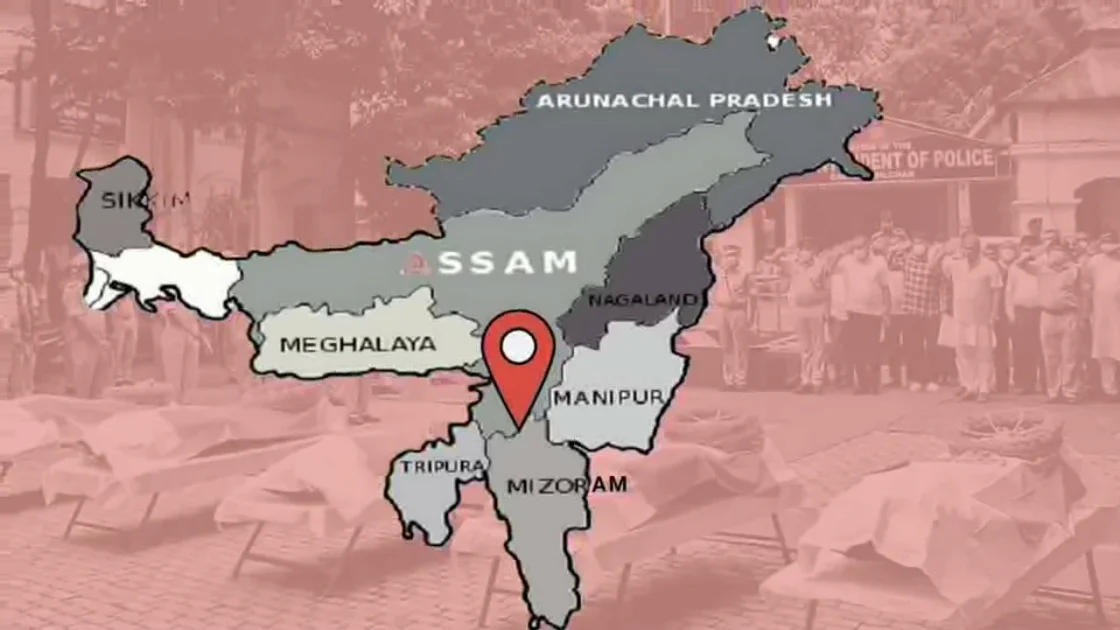
Mizoram, located in the southernmost part of northeast India, is home to the Mizo people and their distinctive tribal culture. Its history spans from ancient tribal migrations through British colonial rule, post-independence unrest, and finally to statehood within the Indian Union.
Early Origins and Tribal Migrations
The origin of the Mizos, like many tribes in northeastern India, is shrouded in mystery. Between 1750 and 1850, the Mizo tribes (formerly called Lushai) migrated from the nearby Chin Hills in present-day Myanmar. During this period, they subjugated indigenous peoples and assimilated them into their communities.
The Mizo society developed an autocratic chieftainship system based on approximately 300 hereditary chiefs, each ruling their own territory with significant authority.
British Colonial Period
After the British annexed Assam in 1826, frequent Mizo raids on the plains prompted punitive expeditions. The British gradually extended control over the region:
1873: The area came under the Inner Line Regulations, which restricted people from the plains from entering the hills without permission.
1870s–1890s: Following several expeditions, the region was formally annexed in the early 1890s.
1898: The North Lushai Hills (under Assam) and South Lushai Hills (under Bengal) were united as the Lushai Hills District of Assam.
1935: The district was declared an "excluded area," meaning it was directly administered by the Assam governor, outside the provincial legislature's jurisdiction.
Post-Independence Era
After India gained independence in 1947, the Lushai Hills remained part of Assam. Tensions gradually grew between the Mizo population and the central government over issues of autonomy, cultural identity, and economic development.
The Mizo Insurgency
In 1966, the Mizo National Front (MNF) declared independence from India and launched an armed rebellion. This marked the beginning of a prolonged insurgency that lasted two decades and resulted in significant loss of life and displacement.
In response, the central government assumed direct control, and in 1972, the Lushai Hills District was reorganized as the union territory of Mizoram.
Peace Accord and Statehood
After years of negotiations, the Mizoram Peace Accord was signed in 1986, ending the insurgency and establishing a framework for reconciliation.
On February 20, 1987, Mizoram was granted statehood and became the 23rd state of India. Since then, the state has enjoyed relative peace and has developed its unique cultural identity, education system, and democratic institutions within the Indian Union.
Conclusion
Mizoram's journey from tribal chieftainships to a modern Indian state reflects the complex history of northeastern India. Through decades of struggle, negotiation, and reconciliation, the Mizo people have established their identity as an integral part of India while preserving their distinctive cultural heritage.